Product family
Level Instrumentation: Transmitters, Switches and Indicators
Level instruments tell you how much liquid or solid is in a tank, sump, borewell or vessel, and trigger pumps, valves or alarms when it moves outside limits.

Application-first selection
Tell us the medium, range and conditions — we match the product type to the duty.
Multi-category sourcing
Instruments, valves, filters, pneumatics and pumps on one enquiry.
Quotation against your specs
Every quote references the parameters you sent, so comparisons are like-for-like.
Engineer-to-engineer support
Ask a technical question before you commit to a model.
Product types
Level Measurement & Control — categories
Flotronics supplies level gauges, level indicators, float and level switches, hydrostatic level transmitters, water level controllers and digital water level recorders. The correct device depends on whether you need a simple high-low alarm or continuous measurement, the liquid's properties, the tank geometry and the signal your control system expects. Share your tank details and medium and we will help you narrow the options and prepare a quotation from the brands we can source. Choose a category to see the range, specifications and quotation details.
Level Measurement & Control
Level Gauges & Indicators: Magnetic, Tubular & OilLevel gauges give a direct visual reading of liquid level in tanks, vessels and boilers. This page covers tank level indicators, water…
View range
Level Measurement & Control
Level Indicators: Magnetic, Tubular, Float & OilLevel indicators let operators read liquid level directly at the tank. This page covers magnetic, tubular, float and chord, constant oil…
View range
Level Measurement & Control
Measuring Equipment: Level Indicators & GaugesDirect-reading level instruments let operators see liquid level at the tank without electronics. This page covers liquid, water and tank…
View range
Level Measurement & Control
Level Switches: Float, Magnetic, Side-Mounted, Vibrating Fork & PaddleLevel switches detect high or low liquid level to start pumps, close valves or raise alarms. This page covers side-mounted, balloon type,…
View range
Level Measurement & Control
Hydrostatic Level Transmitters for Tanks & BorewellsHydrostatic level transmitters measure liquid level from the pressure of the liquid column above a submerged sensor. This page covers…
View range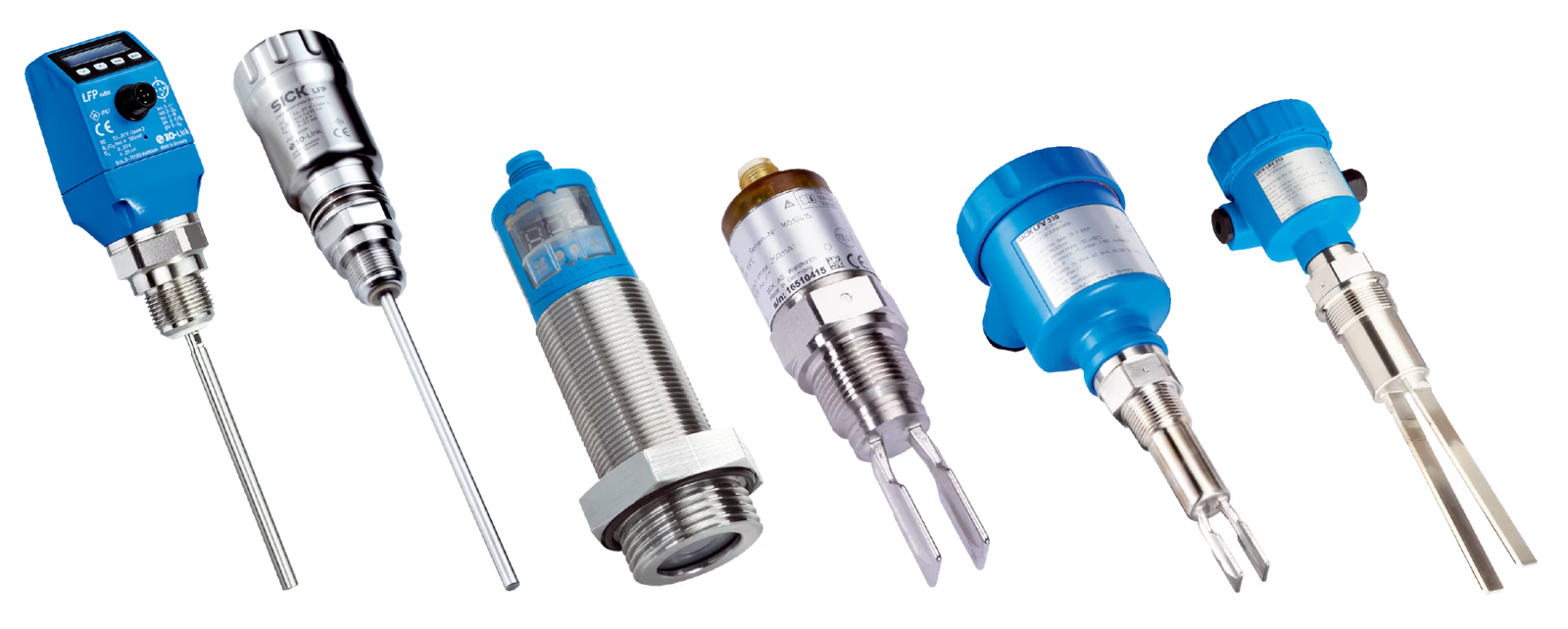
Level Measurement & Control
Level Sensors & Transmitters: Radar, Ultrasonic & HydrostaticLevel transmitters convert liquid level into an electrical signal for control rooms and PLCs. This page covers capacitance, float,…
View range
Level Measurement & Control
Digital Water Level Recorders & Data CollectorsDigital water level recorders log groundwater and surface water levels automatically, so you do not need manual dips. This page covers the…
View range
Level Measurement & Control
Paddle Rotary Level Indicators for Refineries and Bulk SolidsA paddle level indicator senses material in a bin or hopper: while material is present the paddle cannot rotate, and the signal changes…
View range
Level Measurement & Control
Water Level Controller for Pumps and TanksA water level controller starts and stops a pump based on the water level in a tank or sump, preventing overflow and dry running. The…
View rangeHow it works
Types and how to choose
Level devices fall into two groups. Point-level instruments, such as float switches and conductive probes, change state at a set height and are used for high, low or pump-control alarms. Continuous-level instruments report the level at every moment, as a local indication or an electrical signal.
Common continuous principles include hydrostatic pressure, where a submerged sensor measures the pressure of the liquid column above it; magnetic float gauges, where a float with a magnet moves a visible flag; and non-contact methods like ultrasonic and radar, which time a reflected pulse. Hydrostatic transmitters are simple and economical for water, wells and open tanks, but need the liquid density to be known and stable. Float-based devices are mechanical and easy to maintain but need a clear path for the float.
To choose, consider whether the tank is open or pressurised, whether foam, vapour or turbulence is present, the liquid's density and corrosiveness, and how the reading will be used. For simple automation see level switches and water level controllers; for tank readings see hydrostatic level transmitters and level gauges.
| Type | Best suited for | Consider when |
|---|---|---|
| Float switch | High/low alarms and simple pump control | Continuous reading is needed or liquid is sticky |
| Hydrostatic level transmitter | Continuous level in wells, sumps and open tanks | Density changes or tank is pressurised without compensation |
| Magnetic / glass level gauge | Local visual level on process vessels | A remote signal is needed |
| Level indicator | Panel or field indication for operators | Control action or alarms are the main goal |
| Water level controller | Automatic pump start-stop from tank or sump level | Process liquid is not water or conductive |
| Digital water level recorder | Logging borewell and reservoir levels over time | Real-time control is the only requirement |
| Ultrasonic / radar | Non-contact measurement of aggressive or hygienic liquids | Heavy foam, vapour or obstructions are present |
Selection guide
Parameters to specify
Send these with your enquiry for an accurate, like-for-like quotation.
Typical applications
- Overhead and underground water tanks
- Borewell and open-well monitoring
- Sump and effluent pump control
- Chemical and fuel storage tanks
- Boiler feed and condensate tanks
- Refinery and process vessels
- Reservoir logging for irrigation and utilities
Industries
- Water supply and irrigation
- Oil, gas and refineries
- Chemical and process
- Power and boilers
- Food and beverage
- Building services
FAQ
Frequently asked questions
Answers to the questions buyers most often ask before requesting a quotation.
How does a hydrostatic level transmitter work?
A submerged sensor measures the pressure created by the liquid column above it. Because pressure is proportional to height times density, the transmitter converts it into a level reading, usually a 4–20 mA signal. It suits wells, sumps and open tanks. Accuracy depends on a known, stable density and, in vented applications, a proper atmospheric reference.
Should I use a level switch or a level transmitter?
Use a switch when you only need to act at specific heights, such as stopping a pump on low level or raising a high-level alarm. Use a transmitter when you need the actual level for monitoring, stock control or analogue control. Many installations combine both, with switches as independent safety backup.
Can the same level sensor be used for water and chemicals?
Only if the wetted materials are compatible. Water-grade sensors may use materials that corrode or swell in solvents, acids or alkalis. Tell us the exact chemical, concentration and temperature so that a suitable sensor material and, if needed, a different principle can be proposed. Plastic or coated parts may suit aggressive liquids where metals fail, but temperature limits differ, so confirm both together.
What do you need to quote a level instrument?
Please send the liquid, tank dimensions or measuring depth, open or closed vessel, temperature and pressure, required output, supply voltage and mounting preference. For borewells, mention depth and cable length. A photo of the existing installation also helps us match connections. Wiring length and whether a relay or 4–20 mA output is needed also help us confirm the right controller or transmitter.
What is a digital water level recorder used for?
It logs water level at set intervals, typically for borewells, reservoirs and observation wells. The data helps track drawdown and recharge, plan pumping and support reporting. It is a monitoring tool rather than a pump controller, so check whether you also need an automatic controller. If you also need pump control from the same tank, mention it so we can include a suitable controller.
Need a level sensor, switch or controller for your tank?
Share the liquid, tank size, mounting type and output you need, and we will recommend suitable options and quote.