- Home
- Industries
- Pumps for Agricultural Industry
Agricultural Pumps
Pumps for Agricultural Irrigation & Water Transfer
Pumps for agricultural service must cope with varying water sources, long run hours and the need for dependable, easily serviced equipment. The sections below outline the types commonly specified for borewell and open-well irrigation, drip and sprinkler system feed and related duties.
- Pump types covered: Positive Displacement Pumps, Centrifugal pumps, Submersible pumps, End-suction centrifugal pumps, Jet pumps
- Selection guidance for agricultural duty: fluid, flow, head and materials
- Brand and model options sourced to your duty point
- Sourcing support and quotation from Flotronics
Application-first selection
Tell us the medium, range and conditions — we match the product type to the duty.
Multi-category sourcing
Instruments, valves, filters, pneumatics and pumps on one enquiry.
Quotation against your specs
Every quote references the parameters you sent, so comparisons are like-for-like.
Engineer-to-engineer support
Ask a technical question before you commit to a model.
Agricultural Pumps
Range, specifications & options
Confirm specifications against the datasheet for your exact model before ordering.
Need a quote for Pumps for Agricultural Industry?
Send the model or your operating parameters — unsure of a value? Mark it unknown and we will help. Monday to Saturday, 10:00 AM – 5:30 PM.
Elevate Your Farming with Agriculture Pumps by Pumpscart
Elevate Your Agricultural Operations with Cutting-Edge Pump Solutions from Pumpscart. From Irrigation to Crop Protection, Our Pumps Cultivate Efficiency for a Prosperous Harvest. Unleash the Power of Precision in Agriculture!
Pumpscart's agriculture pumps are designed to revolutionize farming practices. Our pumps optimize water distribution, irrigate fields efficiently, and enhance crop yields. With our innovative solutions, we empower farmers to save resources and ensure sustainable agricultural practices.
THE PUMPSCART ADVANTAGE
For over sixty years, Pumpscart has been the global leader in providing pumps and accessories to the world of water and fluid applications. Based in Reggio Emilia – Italy, each Pumpscart is developed with Italian design and innovation that brings performance that lasts a lifetime. Pumpscart offers a wide range of diaphragm, triplex and axial high-pressure plunger pumps and complimentary accessories. With a strong distribution channel, Pumpscart can provide fast solutions and new concepts to the world of water and fluid applications. With Pumpscart, you will always get the following:
Performance Capabilities –Pumpscarts and accessories can provide up to 550 HP, 128 GPM and 40,000 PSI.
Robust Product Line – Pumpscarts offers more than 1,000 pumps and accessories offered for a wide range of industries and applications.
Problem Solving Mentality – Every problem has a solution. With our history, quality, innovation and global affiliations; no problem is too big for us to tackle.
360° Customer Service – From the beginning of the order to when it reaches your doorstep, Pumpscart has a knowledgeable customer service staff that provides more answers than questions.
Centralized Location – Based in Paynesville, MN, easily get quick turn-around on your orders.
Pump Types Used in Agriculture
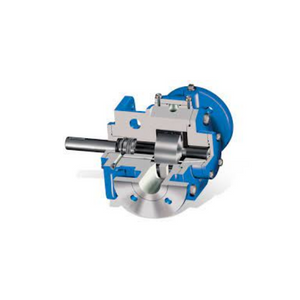
Positive Displacement Pumps
These pumps function by capturing a predetermined volume of fluid and then releasing it. They are perfect for precise fluid flow metering and control.
Application: Positive displacement pumps are employed in processes that call for exact flow rates, such as the transfer of viscous liquids and the distribution of liquid fertilizers.
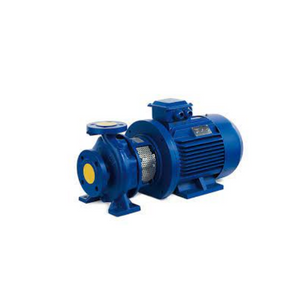
Centrifugal pumps
Centrifugal pumps are the workhorses of agriculture because of their versatility. They use centrifugal force to transport water and are frequently employed for delivering fresh water to households, moving water to livestock, and supplying rural communities with important water supplies. They are a mainstay in the agricultural industry because of their efficiency, dependability, and simplicity of operation.
Application: Village Water Supplies, Domestic Water, and Livestock Water Transfer
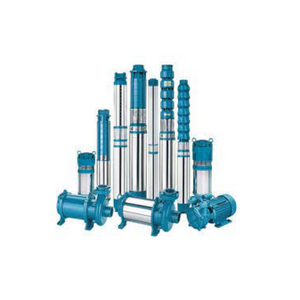
Submersible pumps
A a submersible pump is installed below the surface of the water. It consists of waterproof elements. Submersible pumps can be single staged pumps or multi-staged pumps (a combination of many single staged pumps). They are usually operated by electrical energy. They can be operated by solar energy, wind energy, hydro energy, etc. They can be used when the water level of the water source is shallow.
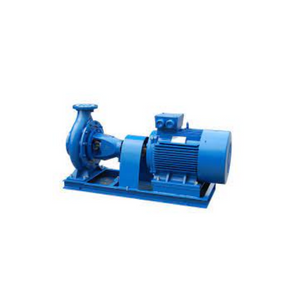
End-suction centrifugal pumps
All the portable types of pumps, including booster pumps, are end-suction centrifugal pumps. They are often connected with a rotating motor. These pumps are not suitable to use when the water source is situated lower than 4 feet from the pump. They are usually operated by electrical energy. They can be operated by solar energy, wind energy, hydro energy, etc. They can be used when the water level is moderately deep.
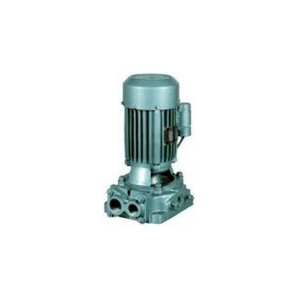
Jet pumps
A jet pump or a hydraulic lift has the capability to lift water from a water source, which is situated very low from the level of the pump, but they have a lower flow rate. They are used to pump water from a river or a deeper water body. They are usually operated by electrical energy. They can be operated by solar energy, wind energy, hydro energy, etc. They can be used to pump out water from a very deep water source.
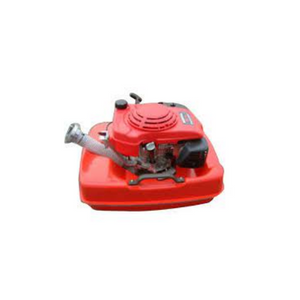
Floating pumps
A floating pump is a normal centrifugal pump that is connected to a floating object. They are used to pump water from the surface of a lake or a pond. They generally make use of submersible pumps. They are usually operated bY electrical energy. They can be operated by solar energy, wind energy, hydro energy, etc. They can be used to pump water from a shallow water body.
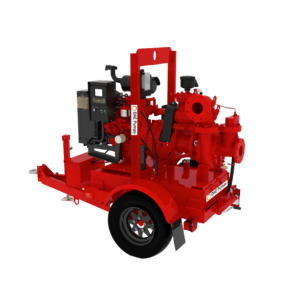
Self-Priming Surface Pump:
Self-priming surface pumps are created specifically for irrigation needs. They can transport water to fields for agricultural irrigation by drawing it from a water source, like a well or reservoir. These pumps are especially useful in locations without nearby water sources. Their self-priming ability streamlines the pumping procedure, saving farmers time and labor.
Application: Irrigation
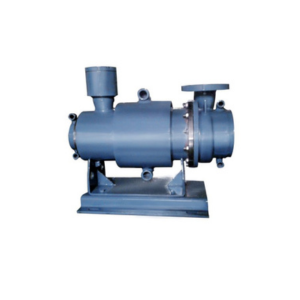
Dynamic Pumps
Dynamic pumps can handle fluids containing solid impurities, such as sand or salt water, which is one of their advantages. Additionally, they are frequently equipped with filters to get rid of these impurities before pumping the fluid. Dynamic pumps can therefore be employed in agriculture for a variety of tasks, such as watering plants and moving liquid between tanks.
Application: Another type of pump that is frequently used in agriculture sectors is the dynamic pump. The centrifugal pump is the most popular type of dynamic pump. Its rotating impeller accelerates the fluid and guides it into the outlet pipe.
Functions:
Livestock Water Transfer
Water must always be available for livestock to drink and bathe. Animals' health and well-being are promoted by providing them with access to clean water through the use of centrifugal pumps.
Domestic Water
For households in rural and agricultural areas, dependable access to clean, fresh water is crucial. Domestic water is delivered to households using centrifugal pumps, giving a reliable and safe water supply for daily use.
3. Small Irrigation
Crop irrigation is a crucial agricultural practice. To effectively transport water to fields, encourage healthy crop growth, and increase yields, self-priming surface pumps are used.
Chemical and Fertilizer Distribution
In modern farming, precision is essential. Pumps help farmers optimize crop health while minimizing waste by correctly distributing fertilizers and chemicals.
Community Water Resources
For their everyday water needs, many rural communities rely on village water systems. Water is transported by centrifugal pumps from sources to towns and villages, enhancing the quality of life for locals.
Pump Benefits in Agriculture:
Increase efficiency
Pumps improve efficiency by automating the water distribution and chemical application processes, lowering labor costs, and assuring consistent outcomes.
Water Conservation
Water usage can be optimized with efficient pumps, decreasing waste and contributing to sustainable farming practices.
Improved Crop Quality
Proper irrigation and nutrient distribution result in healthier, higher-yielding crops, which improves farm profitability overall.
Reduced Downtime
Reliable pumps reduce downtime due to water shortages or equipment problems, ensuring that farm activities continue uninterrupted.
CONCLUSION:
In conclusion, pumps are the heart-beat of contemporary agriculture, ensuring that crops thrive, livestock remains healthy, and farms run smoothly. Choosing the best pump for your agricultural needs can result in higher yields, lower expenses, and a more sustainable farming operation. If you're not sure which pump is best for you, don't be afraid to seek expert guidance to make the most of this important agricultural instrument.
Selection guide
What to specify for an accurate quotation
These parameters decide which variant suits your duty. Send what you know — unknown values can be marked for engineering assistance.
Typical applications
- Borewell and open-well irrigation
- Drip and sprinkler system feed
- Crop-protection and spraying duty
- Farm water transfer and storage filling
- Field drainage and dewatering
FAQ
Frequently asked questions
Answers to the questions buyers most often ask before requesting a quotation.
Which pump types are used in agricultural applications?
The page covers Positive Displacement Pumps, Centrifugal pumps, Submersible pumps, End-suction centrifugal pumps, Jet pumps. The right choice depends on the fluid, solids content, viscosity, flow and head. Send us your process details and we will shortlist suitable options and confirm the selection with the source before quoting.
What should I specify when choosing a pump for agricultural service?
Give the fluid and its properties, flow rate, total head, operating temperature and materials needed. For this industry, also confirm water source, lift and power supply. With these details we can compare pump types, check suitability with the source and prepare an accurate quotation for your plant.
What are agriculture pumps?
These pumps are used to irrigate agricultural land for crop production. A pump system for today’s irrigation is not only about the pumps. Variable speed drives, intelligent control and remote management all necessitate the integration of components in an irrigation system.
What types of pumps are used in agriculture?
Centrifugal water pump is most commonly used for agriculture purposes, it is a rotary machine in which an impeller rotates inside a casing, draws in the liquid at its center, and throws out the liquid through an opening at the side of the casing due to centrifugal force.
Why pump is used in agriculture?
Pumps are used extensively in agriculture to move water from the water source, which could be a river, dam or bore, through pipes to either a point of usage or a storage facility, such as a water tank or an irrigation system.
Why water pump is important in agriculture?
Agricultural water pumps offer multiple benefits to farmers, crops and ecosystems. It’s a modern irrigation practice that help to use water more efficiently. Agricultural water pumps come handy in a complishing the purpose and maintaining the greenery throughout the fields.
Related
Related products & guides
Need a pump for agricultural service?
Send the fluid, flow rate, head, temperature and site conditions, and we will help shortlist suitable pumps and prepare a quotation.