- Home
- Industries
- Pumps for Edible Oil Industry
Edible Oil Pumps
Pumps for Edible Oil: Crude, Refined & Process Transfer
Pumps for edible oil service must cope with viscous oils whose flow behaviour changes strongly with temperature. The sections below outline the types commonly specified for crude oil transfer from extraction, refined oil transfer and related duties.
- Pump types covered: Centrifugal Pumps, Reciprocating Plunger Pumps, Progressive Cavity Pumps, Diaphragm pumps, Gear Pumps
- Selection guidance for edible oil duty: fluid, flow, head and materials
- Brand and model options sourced to your duty point
- Sourcing support and quotation from Flotronics
Application-first selection
Tell us the medium, range and conditions — we match the product type to the duty.
Multi-category sourcing
Instruments, valves, filters, pneumatics and pumps on one enquiry.
Quotation against your specs
Every quote references the parameters you sent, so comparisons are like-for-like.
Engineer-to-engineer support
Ask a technical question before you commit to a model.
Edible Oil Pumps
Range, specifications & options
Confirm specifications against the datasheet for your exact model before ordering.
Need a quote for Pumps for Edible Oil Industry?
Send the model or your operating parameters — unsure of a value? Mark it unknown and we will help. Monday to Saturday, 10:00 AM – 5:30 PM.
Pumps for Edible Oil Industry in India
PumpsCart Pumps provides pumping solutions for a wide array of applications in the Pumps for Edible Oil Industry sector. We have developed ourselves as suppliers of Pumps Edible Oil Industry in India .
Edible Oil Industry In India. The production process of vegetable oil involves the removal of oil from plant components, typically seeds. This can be done via mechanical extraction using an oil mill or chemical extraction using a solvent. The extracted oil can then be purified and, if required, refined or chemically altered.
Types of Pumps in Edible Oil
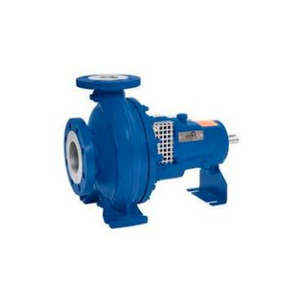
Centrifugal Pumps
Centrifugal pumps use centrifugal force through the rotation of the pump impeller to draw fluid into the intake of the pump and force it through the discharge section via centrifugal force. The flow through the pump is controlled by discharge flow control valves. Single stage centrifugal pumps are primarily used for transferring low-viscosity fluids that require high flow rates.
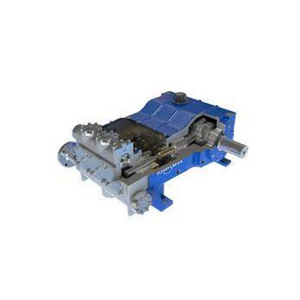
Reciprocating Plunger Pumps
Plunger pumps are some of the most ubiquitous industrial pumps in the oil industry. Plunger pumps use the reciprocating motion of plungers and pistons to pressurize fluid in an enclosed cylinder to a piping system. Plunger pumps are considered constant flow pumps since at a given speed, the flow rate is constant despite the system pressure. Its noisier operation than centrifugal pumps.
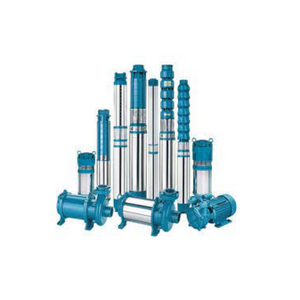
Progressive Cavity Pumps
Progressive cavity pumps are also considered constant flow pumps since at a given speed, the flow rate is relatively constant despite the system pressure. Flow slippage is normal at higher pressures. A relief valve is an essential part of any progressive cavity pump discharge piping system to prevent over pressuring of the pump and piping system.
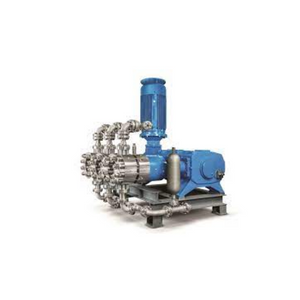
Diaphragm pumps
Diaphragm pumps are one of the most versatile types of oil pumps in the industry and transfer fluid through positive displacement with a valve and diaphragm. Diaphragm pumps are suitable for high-volume fluid transfer operations in oil refineries. They also require much less maintenance than positive displacement pumps due to their fewer moving parts and less friction during operation and are available in compact designs.
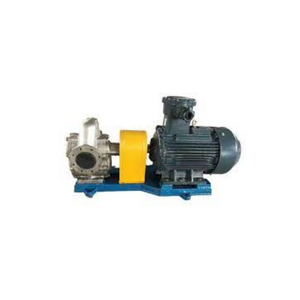
Gear Pumps
Gear pumps are positive displacement (or fixed displacement), meaning they pump a constant amount of fluid for each revolution. The internal gears do not touch, so non-lubricating fluids can be pumped with external gear pumps. Internal gear pumps use a shaft driven drive gear to drive the internal mating gear. Since the pumped fluid passes between the close gear tolerances, gear pumps are normally used for clean fluids.
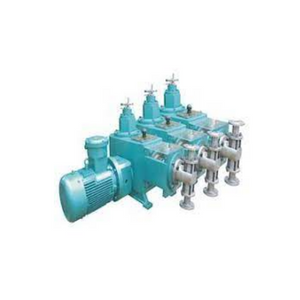
Floating pumps
A metering pump moves a precise volume of liquid in a specified time period providing an accurate flow rate. Delivery of fluids in precise adjustable flow rates is sometimes called metering. The term “metering pump” is based on the application or use rather than the exact kind of pump used. Most metering pumps are simplex reciprocating pumps with a packed plunger or diaphragm liquid end. No pumped liquid leaks to the atmosphere.
Selection guide
What to specify for an accurate quotation
These parameters decide which variant suits your duty. Send what you know — unknown values can be marked for engineering assistance.
Typical applications
- Crude oil transfer from extraction
- Refined oil transfer
- Process feed to refining stages
- Tank filling and unloading
- Filtration-stage feed
FAQ
Frequently asked questions
Answers to the questions buyers most often ask before requesting a quotation.
Which pump types are used in edible oil applications?
The page covers Centrifugal Pumps, Reciprocating Plunger Pumps, Progressive Cavity Pumps, Diaphragm pumps, Gear Pumps. The right choice depends on the fluid, solids content, viscosity, flow and head. Send us your process details and we will shortlist suitable options and confirm the selection with the source before quoting.
What should I specify when choosing a pump for edible oil service?
Give the fluid and its properties, flow rate, total head, operating temperature and materials needed. For this industry, also confirm viscosity at handling temperature. With these details we can compare pump types, check suitability with the source and prepare an accurate quotation for your plant.
What is the function of edible oil?
Edible oils are sources of dietary fats that play an essential role in the body, satisfying nutritional needs, growth and are necessary for proper functioning of brain and nerve system as well as the endocrine environment.
Benefits of our edible oil pumps range
Can handle temperatures up to 250°C
For low and high viscosity edible oils up to 80,000 CP
Models capable of handling solids such as olive residue
FDA and 3A approved models for safe food processing
Flow rates up to 83,000lpm and pressure capabilities of up to 50bar
What is edible oil used for?
Edible oils, the source of essential fatty acids procured from plant, animal, or synthetic fat, is used in frying, baking, and other types of cooking/food preparations
What are the characteristics of edible oil?
Edible oils provide a concentrated source of energy and essential fatty acids through daily dietary intake. Lipids also serve as an important constituent of cell walls and carrier of fat-soluble vitamins. In addition, lipids provide flavor, texture and mouthfeel to the food.
Related
Related products & guides
Need a pump for edible oil service?
Send the fluid, flow rate, head, temperature and site conditions, and we will help shortlist suitable pumps and prepare a quotation.