- Home
- Industries
- Pumps for Explosive Industry
Explosive Pumps
Pumps for Explosive Industry: Emulsion & Bulk Transfer
Pumps for explosive service must cope with safety-critical, sensitive media where pump choice must limit heat, friction and shear. The sections below outline the types commonly specified for pumpable emulsion explosive transfer, bulk loading into storage and vehicles and related duties.
- Pump types covered: Dynamic Pumps, Positive Displacement Pumps, Centrifugal pumps, Specialty pumps, Reciprocating pumps
- Selection guidance for explosive duty: fluid, flow, head and materials
- Brand and model options sourced to your duty point
- Sourcing support and quotation from Flotronics
Application-first selection
Tell us the medium, range and conditions — we match the product type to the duty.
Multi-category sourcing
Instruments, valves, filters, pneumatics and pumps on one enquiry.
Quotation against your specs
Every quote references the parameters you sent, so comparisons are like-for-like.
Engineer-to-engineer support
Ask a technical question before you commit to a model.
Explosive Pumps
Range, specifications & options
Confirm specifications against the datasheet for your exact model before ordering.
Need a quote for Pumps for Explosive Industry?
Send the model or your operating parameters — unsure of a value? Mark it unknown and we will help. Monday to Saturday, 10:00 AM – 5:30 PM.
Pumps for Explosive Industry in India
PumpsCart Pumps provides pumping solutions for a wide array of applications in the pumps for explosive industry. We have developed ourselves as suppliers of Pumps explosive industry in India .
Explosive Industry Pumps In India Safety in and at construction sites where explosives are used was a problem for a long time, because the storage and transport of “volatile” explosives always constitute an enormous risk. In order to reduce the danger and achieve a better explosive performance, there has for some time been greater use of pumpable emulsion explosives. A global explosives supplier had used a progressing cavity pump to fill the storage silos with the ready-to-use ammonium nitrate emulsion. However, the pump did not provide the required level of performance and delayed the supplying of the mines and customers due to regular breakdowns. The pin joint could not withstand the torque nor the deflection on the coupling rod and therefore often failed. The shortness of the coupling rod increased the angle which the joint had to compensate. That not only increased the stress on the joint itself, but also the dynamic load on its seal system. The lubricating effect of the lubricant used for the pin joint was not sufficient either. As a result, the pump was constantly breaking down. Since the pump had a crucial role to play in the process chain, every breakdown led to costly delivery delays. In order to increase the service life for the application and the throughput rate of the whole system, the emulsion searched for a more reliable pump with a larger capacity and found pumpscart.
Types of Explosive Industry
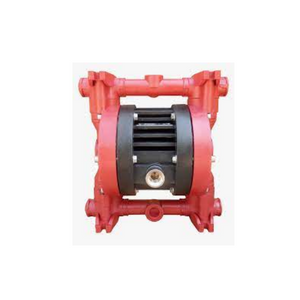
Dynamic Pumps
Dynamic pumps – including centrifugal pumps and the various specialty pumps – use a combination of velocity and fluid momentum to generate pump pressure. A dynamic pump operates by producing a variable flow, which is effective in creating high flow rates with low viscosity fluids.
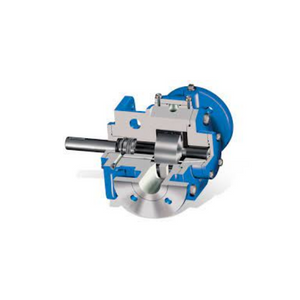
Positive Displacement Pumps
Positive displacement pumps – including reciprocating and rotary pumps – use contracting and expanding cavities to cause the fluids to move. A positive displacement pump operates by producing a flow that is more constant, which is well-suited for the production of high pressures and low flow rates when paired with high viscosity fluids.
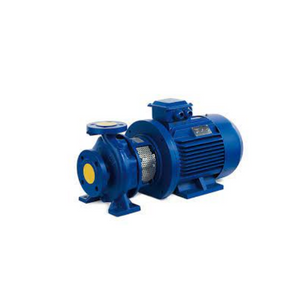
Centrifugal pumps
Centrifugal pumps including axial flow, mixed flow, and radial flow pumps accelerate fluids by using an impeller. They are also the most commonly used pumps. Centrifugal pumps are used to transport fluids. They transport fluids by conversion of energies. Centrifugal pumps are a sub class of dynamic axisymmetric work absorbing turbomachinery.
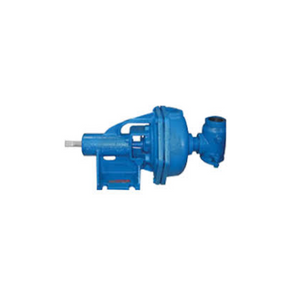
Specialty pumps
Specialty pumps including the cantilever, jet, and turbine pumps – are defined by their own unique attributes. A wide range of pumps covers the different performances. Low flow and high heads.
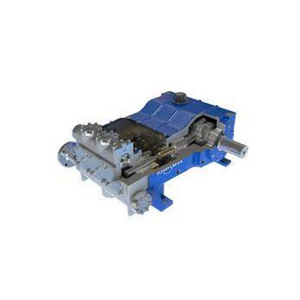
Reciprocating pumps
Reciprocating pumps use linear motion rather than rotary motion to direct fluids. Reciprocating pumps include bladder pumps, diaphragm pumps, double diaphragm pumps, peristaltic pumps, piston pumps, plunger pumps, and triplex pumps.
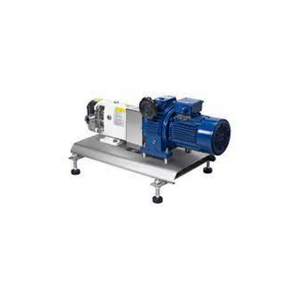
Rotary pumps
Rotary pumps direct fluid through a mechanism by applying a rotating mechanical motion. These can include gear pumps, progressive cavity pumps, rotary lobe pumps, rotary vane vacuum pumps, and screw pumps.
Selection guide
What to specify for an accurate quotation
These parameters decide which variant suits your duty. Send what you know — unknown values can be marked for engineering assistance.
Typical applications
- Pumpable emulsion explosive transfer
- Bulk loading into storage and vehicles
- Oxidiser and raw-material solution transfer
- Storage tank filling
- Cartridging-line feed
FAQ
Frequently asked questions
Answers to the questions buyers most often ask before requesting a quotation.
Which pump types are used in explosive applications?
The page covers Dynamic Pumps, Positive Displacement Pumps, Centrifugal pumps, Specialty pumps, Reciprocating pumps. The right choice depends on the fluid, solids content, viscosity, flow and head. Send us your process details and we will shortlist suitable options and confirm the selection with the source before quoting.
What should I specify when choosing a pump for explosive service?
Give the fluid and its properties, flow rate, total head, operating temperature and materials needed. For this industry, also confirm safety rules and fluid sensitivity. With these details we can compare pump types, check suitability with the source and prepare an accurate quotation for your plant.
What is explosive pump?
Explosion Proof Pumps are designed to operate in potentially hazardous environments such as chemical plants, mines and oil rigs. These pumps are built to enclose motors and other vulnerable parts which are insulated to prevent combustible elements from igniting vapor and causing internal/external explosions.
Explosive pumps features
The primary specifications to consider when selecting explosion pumps are flowrate, pump head, pressure, horsepower, power rating, outlet diameter, and operating temperature. These specifications are described in detail in Engineering360’s Pump Flow page.
Related
Related products & guides
Need a pump for explosive service?
Send the fluid, flow rate, head, temperature and site conditions, and we will help shortlist suitable pumps and prepare a quotation.