Product family
Flow Measurement & Control: Flowmeters, Indicators and Valves
Flow measurement tells you how much liquid, gas or steam is moving through a line, and flow control lets you hold or change that rate. Plants use it for batching, billing, energy accounting, process control and early detection of blockages or leaks.
Application-first selection
Tell us the medium, range and conditions — we match the product type to the duty.
Multi-category sourcing
Instruments, valves, filters, pneumatics and pumps on one enquiry.
Quotation against your specs
Every quote references the parameters you sent, so comparisons are like-for-like.
Engineer-to-engineer support
Ask a technical question before you commit to a model.
Product types
Flow Measurement & Control — categories
Flotronics is an industrial supplier that helps engineers and purchase teams shortlist flowmeters, visual flow indicators and related control components for water, chemicals, oils, compressed air and steam. The right device depends on the fluid, line size, flow range, accuracy needed and how the signal will be used. Send us your process details and we will help match a suitable type, then prepare a quotation from the brands and ranges we can source. Choose a category to see the range, specifications and quotation details.
Flow Measurement & Control
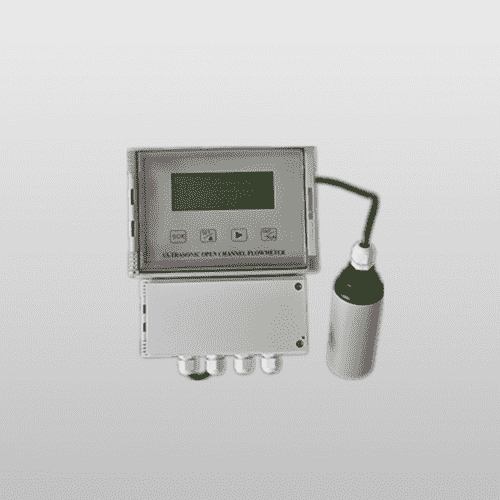
Open Channel Flow Meters (Ultrasonic & Area Velocity)Open channel flow meters measure the flow of liquid in channels, drains and partly filled pipes where closed-pipe meters cannot be used.…
View rangeHow it works
Types and how to choose
Flowmeters work on a few distinct principles. Volumetric and mechanical meters (turbine, positive displacement, variable area) respond to the physical movement of fluid. Electronic meters infer flow from a physical effect: induced voltage in a conductive liquid (electromagnetic), vortex shedding, ultrasonic transit time, or heat carried away from a heated element (thermal mass). Differential pressure devices such as orifice plates relate pressure drop to flow rate.
Choosing between them starts with the fluid. Electromagnetic meters need a conductive liquid, so they are unsuitable for hydrocarbons or clean gas. Thermal mass suits gases such as compressed air. Positive displacement handles viscous oils better than most alternatives. Variable area (rotameter) types give a simple local reading and work well where a visual indication is enough.
Next consider the line: pipe size, straight-run availability, pressure and temperature, and whether the liquid carries solids or air. Finally decide what you need from the signal: a local reading, a totaliser, or a 4–20 mA or pulse output to a PLC. For basic visual checks, see flow indicators and flowmeters; to regulate flow, see industrial valves.
| Type | Best suited for | Consider when |
|---|---|---|
| Electromagnetic | Conductive liquids such as water, effluent and slurries | Fluid is non-conductive or the line is not kept full |
| Variable area (rotameter) | Local visual reading of clean liquids or gases | You need remote signal or the fluid is opaque or dirty |
| Turbine | Clean, low-viscosity liquids with steady flow | Fluid carries particles or viscosity is high |
| Positive displacement | Viscous liquids such as oils and resins | Flow is very high or the fluid has abrasive solids |
| Vortex / ultrasonic | Steam, gases and clean or dirty liquids depending on design | Straight run is short or flow is very low |
| Thermal mass | Gas and compressed-air flow, reported as mass flow | Gas composition varies or moisture is present |
| Sight / flow indicator | Confirming that flow exists in a line | Quantified measurement is required |
Selection guide
Parameters to specify
Send these with your enquiry for an accurate, like-for-like quotation.
Typical applications
- Water and effluent monitoring in treatment plants
- Chemical dosing and batching
- Compressed-air consumption tracking
- Steam and boiler feed measurement
- Fuel and lubricant oil metering
- Cooling-water and chilled-water loops
- Verifying flow in process lines and skids
Industries
- Water and wastewater
- Chemical and process
- Power and boilers
- Food and beverage
- Pharmaceutical
- Textile and dyeing
FAQ
Frequently asked questions
Answers to the questions buyers most often ask before requesting a quotation.
How do I choose between an electromagnetic flowmeter and a turbine meter?
Start with the fluid. Electromagnetic meters need a conductive liquid but have no moving parts and tolerate solids, so they suit water, effluent and slurries. Turbine meters suit clean, low-viscosity liquids and give good repeatability on steady flow, but moving parts wear with particles. Also compare line size, straight-run space and the output you need. Share these with us and we can suggest a type.
What information do you need to quote a flowmeter?
Please send the fluid, line size and connection type, minimum, normal and maximum flow, operating pressure and temperature, required output signal and whether the area is hazardous. A line sketch or P&ID extract helps if you are unsure about installation space. With these we can suggest a type and request pricing from the brands we can source.
Can one flowmeter measure both liquids and gases?
Usually not. Gas density changes with pressure and temperature, so gas measurement often uses thermal mass or vortex principles, sometimes with compensation. Liquid meters use different sensing and sizing. Some vortex and ultrasonic designs cover both fluid types, but sizing and configuration differ. Tell us the fluid and conditions so the correct version is specified.
Is a flow indicator the same as a flowmeter?
No. A flow indicator, such as a sight glass with a rotor or paddle, confirms that fluid is moving and gives a rough visual cue. A flowmeter quantifies the rate or total volume and can output a signal to a PLC. Indicators suit simple checks on lube or cooling lines; choose a flowmeter when you need numbers.
Why does straight pipe length matter?
Bends, valves and reducers upstream distort the velocity profile, which affects readings on vortex, ultrasonic, turbine and differential pressure meters. Manufacturers specify straight-run needs in pipe diameters. If space is limited, flow conditioners or a different principle such as electromagnetic may help. Tell us your layout and we will account for it.
Technical resources
Related selection guides
Flow Measurement
Types of Industrial Flow Meters and How to ChooseFlow meters differ in principle, and each suits particular fluids and pipe conditions. This guide compares electromagnetic, ultrasonic, turbine, vortex, Coriolis, variable-area and positive displacement meters, and lists the process data you should gather before choosing between them, such as fluid, range and line size.
Read guideNeed a flowmeter or flow indicator for your line?
Send the fluid, line size, flow range, pressure, temperature and output signal, and we will suggest a suitable type and prepare a quotation.