Product family
Vacuum Equipment: Pumps, Vacuum Solenoid Valves and Components
Vacuum is used to hold, lift, degas, dry, evacuate and transfer. It appears in packaging machines, laboratories, material handling, food processing and many process plants.
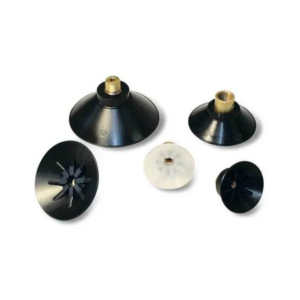
Application-first selection
Tell us the medium, range and conditions — we match the product type to the duty.
Multi-category sourcing
Instruments, valves, filters, pneumatics and pumps on one enquiry.
Quotation against your specs
Every quote references the parameters you sent, so comparisons are like-for-like.
Engineer-to-engineer support
Ask a technical question before you commit to a model.
Product types
Vacuum Equipment — categories
Flotronics supplies vacuum equipment and components, including vacuum solenoid valves with seals suited to vacuum duty, and can source related products for industrial vacuum systems. Choosing correctly depends on how deep a vacuum you need, how much gas must be removed and how quickly, what the gas contains, and whether oil, moisture or particles are present. Send us your duty details and we will help narrow suitable products and prepare a quotation. Our team can also review an existing datasheet or nameplate and suggest equivalents, so you do not need a full specification to begin. Choose a category to see the range, specifications and quotation details.
Vacuum Equipment
Vacuum Products: Cups, Generators, Filters, Pumps and SwitchesVacuum products handle, lift or hold parts using suction and create vacuum for packing, pick-and-place and process use. This page covers…
View rangeHow it works
Types and how to choose
A vacuum system removes gas from a closed volume so that its pressure falls below atmospheric. Performance is described by two linked values: the ultimate vacuum (how low the pressure can go) and the pumping speed (how quickly gas is removed at a given pressure). Both must suit the application, because a deep vacuum is useless if pump-down takes too long.
Vacuum levels are broadly grouped as rough (low), medium and high vacuum, and each uses different pumping technology. Many industrial tasks such as holding, lifting, packaging and filtration sit in the rough range and use rotary vane, liquid-ring, diaphragm or venturi-type sources. Higher vacuum needs staged pumping.
Components around the pump matter equally. Vacuum solenoid valves switch the vacuum on and off; they need seals and body construction that stay tight under negative pressure, and are often chosen with NBR or FKM seals depending on the gas and temperature. Filters protect the pump from dust and liquid, and fittings and tubing must not collapse or leak. Account for the gas: condensable vapours, solvents or corrosive gases call for specific pump types and materials. See our vacuum products and solenoid valves.
| Type | Best suited for | Consider when |
|---|---|---|
| Vacuum solenoid valve | Switching vacuum lines to cups, chambers and circuits | Flow capacity in the vacuum range is critical |
| Rotary vane source | General rough vacuum for packaging and machinery | Oil carry-over into the process is unacceptable |
| Liquid-ring source | Wet, vapour-laden gas streams | Ultimate vacuum depth is the priority |
| Diaphragm source | Oil-free, clean duties and laboratories | High pumping speed is needed |
| Venturi / ejector | Compact vacuum from compressed air at point of use | Compressed air is scarce or expensive |
| Vacuum filter / separator | Protecting sources from dust and liquid | Gas is already clean and dry |
Selection guide
Parameters to specify
Send these with your enquiry for an accurate, like-for-like quotation.
Typical applications
- Vacuum gripping and pick-and-place
- Packaging and sealing machines
- Degassing and evacuation of chambers
- Vacuum filtration and transfer
- Laboratory and testing equipment
- Drying and impregnation
- Gas sampling and analysers
Industries
- Packaging
- Food and beverage
- Pharmaceutical and laboratories
- Plastics and automotive
- Electronics assembly
- Chemical and process
FAQ
Frequently asked questions
Answers to the questions buyers most often ask before requesting a quotation.
What is the difference between vacuum level and pumping speed?
Vacuum level is the pressure the system can reach, while pumping speed is the volume of gas removed per unit time at a given pressure. You need both: enough depth for the process and enough speed to reach it within the cycle time. A large chamber on a fast cycle needs higher speed.
Can any solenoid valve be used for vacuum?
Not always. Some solenoid valves rely on a pressure difference to open or seal, so they may not operate properly or may leak under vacuum. Vacuum-rated valves use suitable internal design and seals such as NBR or FKM. Tell us the vacuum level and gas so that a suitable valve is quoted.
Do I need an oil-free vacuum source?
If the vacuum draws from food, pharmaceutical, laboratory or electronics environments where oil vapour would contaminate the product, an oil-free source such as a diaphragm pump or ejector is generally preferred. For general machinery, oil-sealed sources are common and cost-effective with proper exhaust handling. Ask us about oil-free options if your process cannot tolerate even trace contamination, and mention any cleanroom or hygiene rules.
How do I protect a vacuum source from dust and liquid?
Fit a filter or separator on the suction line, sized for the flow. Liquids can damage rotary vane sources and dust wears seals and vanes. Where liquid is expected regularly, choose a liquid-tolerant pump type or add a condensate trap with a drain. Exhaust filters and oil mist separators may also be needed on oil-sealed units so that discharged air stays clean.
What do you need to give a vacuum equipment quote?
Please share the target vacuum, chamber volume or flow, cycle time, gas or vapour type, contamination risk, duty cycle, power supply and connection sizes. If you want a valve, add coil voltage and port size. Add any hygiene, ATEX or noise limits too, since these narrow the choice of source and valve materials quickly.
Specifying vacuum equipment or valves?
Send vacuum level, chamber volume or flow, gas type and duty cycle, and we will propose options and quote.