- Home
- Products
- Industrial Pumps
- Industrial Centrifugal Pumps
Pumps
Industrial Centrifugal Pumps for Process & Utility Duty
Centrifugal pumps move liquid by spinning an impeller inside a casing, converting rotational energy into flow and pressure. They are the usual choice for clean or lightly contaminated liquids in water supply, cooling circuits, chemical transfer and general process duty.
- Working principle explained: impeller, casing, inlet and outlet
- Centrifugal pump types covered on the page
- Suitable for a range of industrial fluid-handling duties
- Selection support and quotation from Flotronics
Application-first selection
Tell us the medium, range and conditions — we match the product type to the duty.
Multi-category sourcing
Instruments, valves, filters, pneumatics and pumps on one enquiry.
Quotation against your specs
Every quote references the parameters you sent, so comparisons are like-for-like.
Engineer-to-engineer support
Ask a technical question before you commit to a model.
Pumps
Range, specifications & options
Choosing the right one depends on the fluid, the duty point, suction conditions and materials. Flotronics acts as a supplier and sourcing partner: send us your application details and we help you shortlist suitable centrifugal pumps from the brands available through us, and prepare a quotation. Confirm specifications against the datasheet for your exact model before ordering.
Need a quote for Industrial Centrifugal Pumps?
Send the model or your operating parameters — unsure of a value? Mark it unknown and we will help. Monday to Saturday, 10:00 AM – 5:30 PM.
Industrial Centrifugal Pump Supplier
Industrial Centrifugal Pump Supplier: Delivering pumps for diverse industrial needs. Explore our range of efficient fluid handling solutions and reliability.
As a industrial centrifugal pump supplier, we are dedicated to providing pumping solutions tailored to the diverse needs of industries worldwide. Our commitment to excellence ensures you have access to top-tier centrifugal pumps known for their reliability, efficiency, and robust performance. Partner with us to elevate your fluid handling capabilities and achieve operational excellence.
Working Principle
Centrifugal pumps operate on the principle of centrifugal force. At their core, these pumps consist of three key components:
Impeller
The heart of the centrifugal pump, the impeller is a rotating disk with curved blades. As it spins, it imparts kinetic energy to the liquid.
Casing
The casing surrounds the impeller, creating a sealed chamber. It guides the fluid's path and ensures efficient energy transfer.
Inlet and Outlet
Liquid enters the pump through the inlet, where it encounters the rapidly spinning impeller. The impeller's rotation forces the liquid outward, creating a vortex that propels it toward the outlet.
As the liquid flows through the impeller, it experiences a drop in pressure at the center of the impeller and an increase in pressure at the outer edges. This pressure differential drives the fluid through the pump and out of the outlet, effectively converting mechanical energy into kinetic energy, which propels the liquid forward.
Types of Centrifugal Pumps
Centrifugal pumps are incredibly versatile, with various types designed to cater to specific applications and requirements across industries. Understanding the different types of centrifugal pumps is essential for selecting the right pump for a particular job. Here, we explore some of the most common types of centrifugal pumps, each tailored to meet specific fluid handling needs
Single-Stage Centrifugal Pumps
Multi-Stage Centrifugal Pumps
Self-Priming Centrifugal Pumps
Submersible Centrifugal Pumps
Axial Flow Centrifugal Pumps
Radial Flow Centrifugal Pumps
Cantilever Centrifugal Pumps
Magnetic Drive Centrifugal Pumps
Sanitary Centrifugal Pumps
ANSI Centrifugal Pumps
Boiler Feed Centrifugal Pumps
Cryogenic Centrifugal Pumps
Trash Pumps
High-Pressure Centrifugal Pumps
Mixed-Flow Centrifugal Pumps
Chemical Centrifugal Pumps
Hygienic Centrifugal Pumps
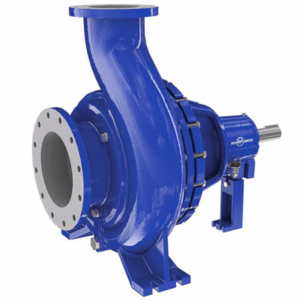
Single-Stage Centrifugal Pumps
Single-Stage Centrifugal Pumps
These pumps have a single impeller that generates centrifugal force to move fluid through the pump.
Working Principle:
Liquid enters the pump through the suction port, where it encounters the spinning impeller. The impeller's blades push the liquid outward, creating a flow of fluid.
Applications:
Single-stage centrifugal pumps are ideal for low-to-moderate head (pressure) applications. They are commonly used in water supply, circulation, drainage, and irrigation systems.
Multi-Stage Centrifugal Pumps:
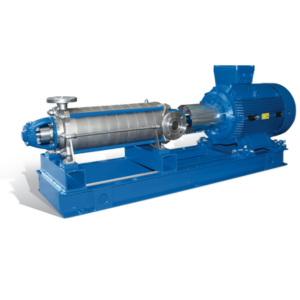
Multi-Stage Centrifugal Pumps
Multi-stage centrifugal pumps feature multiple impellers arranged in series within the same pump housing
Working Principle:
Liquid passes through one impeller and then flows into the next, increasing pressure at each stage. This design enables multi-stage pumps to generate higher head (pressure).
Applications:
Multi-stage centrifugal pumps are used in applications requiring high pressure, such as boiler feed, high-pressure washdown, and various industrial processes.
Self-Priming Centrifugal Pumps
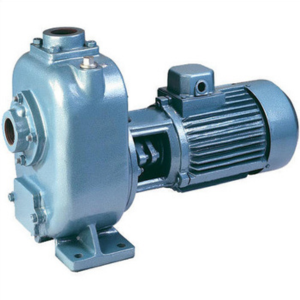
Self-Priming Centrifugal Pumps
Self-priming pumps have a unique design that allows them to draw liquid from a lower level without external priming
Working Principle:
These pumps have a mechanism that creates a vacuum, enabling them to suck in fluid, making them ideal for situations where the pump must lift liquid from below the pump level.
Applications:
Self-priming centrifugal pumps are commonly used in water wells, sump pumps, and portable pumping applications.
Submersible Centrifugal Pumps
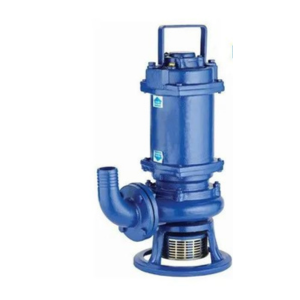
Submersible Centrifugal Pumps
Submersible pumps are designed to operate submerged in the fluid they are pumping.
Working Principle:
An electric motor drives the impeller to create the necessary flow and pressure. Submersible pumps are hermetically sealed to prevent liquid from entering the motor.
Applications:
Submersible centrifugal pumps are essential for dewatering, sewage treatment, deep-well water extraction, and various underwater applications.
Axial Flow Centrifugal Pumps

Axial Flow Centrifugal Pumps
Axial flow pumps move fluid parallel to the pump shaft, creating high flow rates with relatively low head pressure.
Working Principle:
The impeller's blades generate axial flow, efficiently moving large volumes of fluid.
Applications:
These pumps are used in flood control, agricultural irrigation, cooling water circulation, and applications where high flow rates are required.
Radial Flow Centrifugal Pumps

Radial Flow Centrifugal Pumps
Radial flow pumps move fluid perpendicular to the pump shaft, offering moderate flow rates with higher head pressure.
Working Principle:
The impeller generates radial flow, which is suitable for applications where a balance of flow rate and pressure is needed.
Applications:
Radial flow centrifugal pumps find use in chemical processing, HVAC systems, municipal water supply, and many industrial processes.
Cantilever Centrifugal Pumps
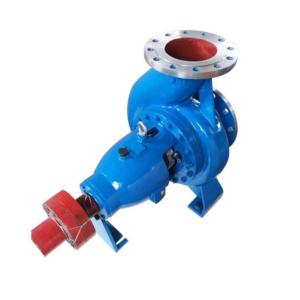
Cantilever Centrifugal Pumps
Cantilever pumps have a design where the impeller is supported at one end, eliminating the need for a shaft seal near the impeller.
Working Principle:
The impeller is mounted on an extended shaft, allowing it to handle abrasive or corrosive fluids without compromising seal integrity.
Applications:
Cantilever centrifugal pumps are used in challenging applications, including mining, chemical processing, and handling slurries or abrasive fluids
Magnetic Drive Centrifugal Pumps
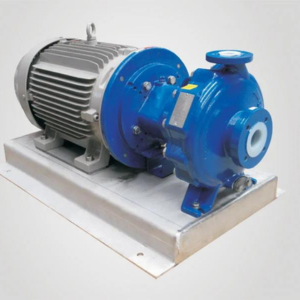
Magnetic Drive Centrifugal Pumps
Magnetic drive pumps use a magnetic coupling to transmit power from the motor to the impeller without a physical shaft, preventing fluid leakage.
Working Principle:
The magnetic coupling transfers torque through the pump casing, isolating the fluid from the motor.
Applications:
These pumps are ideal for handling hazardous or corrosive chemicals in industries such as pharmaceuticals, semiconductor manufacturing, and petrochemicals.
Sanitary Centrifugal Pumps
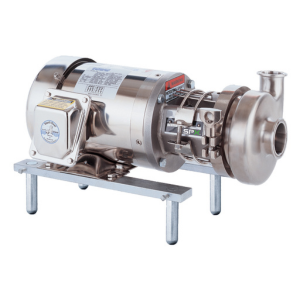
Sanitary Centrifugal Pumps
Sanitary pumps are designed with materials and construction that meet stringent hygiene and cleanliness standards.
Working Principle:
They are used in applications where product purity and cleanliness are critical, such as food and beverage processing, pharmaceuticals, and biotechnology.
Applications:
Sanitary centrifugal pumps are used to transfer sensitive fluids without the risk of contamination.
ANSI Centrifugal Pumps
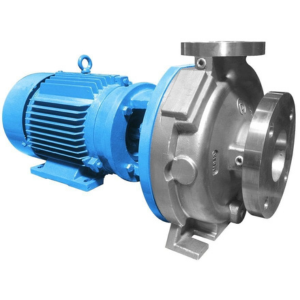
ANSI Centrifugal Pumps
Description: ANSI pumps are standardized centrifugal pumps designed according to the ANSI (American National Standards Institute) B73.1 standard.
Working Principle:
They are commonly used in the chemical industry and other applications requiring a standardized pump design for ease of maintenance and interchangeability.
Applications:
ANSI centrifugal pumps are used in chemical processing, petrochemical, and other industrial settings
Boiler Feed Centrifugal Pumps
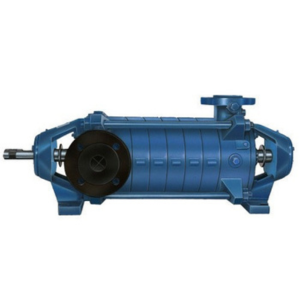
Boiler Feed Centrifugal Pumps
These pumps are specifically designed to deliver water at high pressure to boilers in power plants and industrial facilities.
Working Principle:
They provide the required pressure to ensure efficient steam generation in boilers.
Applications:
Boiler feed centrifugal pumps are critical components in power generation, where steam is used for electricity production.
Cryogenic Centrifugal Pumps
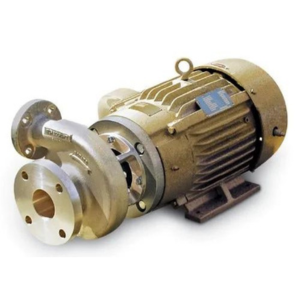
Cryogenic Centrifugal Pumps
Cryogenic pumps are specially designed to handle extremely low-temperature fluids, such as liquefied natural gas (LNG) or liquid oxygen.
Working Principle:
These pumps use materials and construction methods capable of withstanding the extreme cold and preventing fluid vaporization.
Applications:
Cryogenic centrifugal pumps are essential in industries like LNG production, medical gas processing, and aerospace.
Trash Pumps

Trash Pumps
Trash pumps are built to handle fluids containing solids or debris, making them suitable for applications with dirty or contaminated water.
Working Principle:
They have a robust impeller design that can pass larger particles without clogging.
Applications:
Trash centrifugal pumps are used in construction, mining, wastewater handling, and flood control.
High-Pressure Centrifugal Pumps
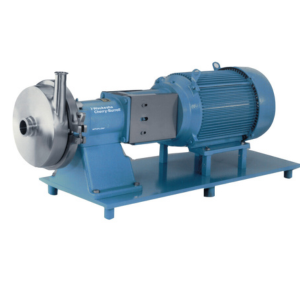
High-Pressure Centrifugal Pumps
High-pressure pumps are designed to generate significantly higher head pressure than standard centrifugal pumps.
Working Principle:
They are equipped with multiple impellers and a sturdier construction to handle the increased pressure.
Applications:
High-pressure centrifugal pumps find use in industries requiring precise pressure control, such as the oil and gas sector.
Mixed-Flow Centrifugal Pumps
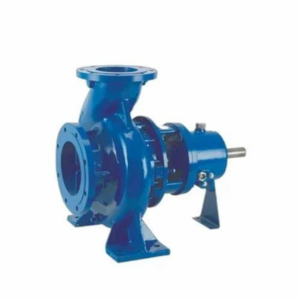
Mixed-Flow Centrifugal Pumps:
Mixed-flow pumps combine features of axial and radial flow pumps, providing moderate flow rates and moderate head pressure.
Working Principle:
Fluid flows both axially and radially through the impeller, creating a balance between flow rate and pressure.
Applications:
Mixed-flow centrifugal pumps are used in irrigation, flood control, and water treatment.
Chemical Centrifugal Pumps
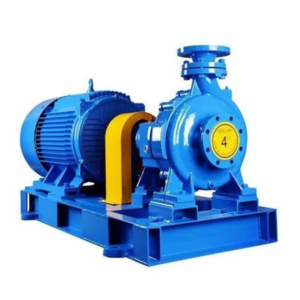
Chemical Centrifugal Pumps
Chemical pumps are designed with materials that resist corrosion and handle aggressive or corrosive chemicals safely.
Working Principle:
They ensure the safe transfer of chemicals without damage to the pump or risk of contamination.
Applications:
Chemical centrifugal pumps are crucial in chemical processing, petrochemical, and wastewater treatment industries.
Hygienic Centrifugal Pumps
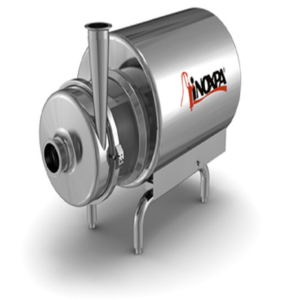
Hygienic Centrifugal Pumps
Hygienic pumps are engineered for applications where product purity and cleanliness are paramount.
Working Principle:
They feature polished surfaces and smooth contours to minimize the risk of bacterial growth and product contamination.
Applications:
Hygienic centrifugal pumps are used in pharmaceuticals, biotechnology, and food and beverage processing.
Applications
Centrifugal pumps find extensive use across numerous industries and sectors:
Water Treatment
They are essential for water supply, wastewater treatment, desalination, and water circulation.
Oil and Gas
Centrifugal pumps handle the transfer of crude oil, refined products, and natural gas liquids.
Manufacturing
Industrial processes, from chemical production to food processing, rely on centrifugal pumps for fluid transport.
Construction
These pumps are employed in construction for dewatering, concrete mixing, and water supply.
Agriculture
Centrifugal pumps play a pivotal role in irrigation, crop spraying, and water transfer on farms.
Maritime
They are used in ship bilge systems, ballast water treatment, and fire suppression systems.
Selection guide
What to specify for an accurate quotation
These parameters decide which variant suits your duty. Send what you know — unknown values can be marked for engineering assistance.
Typical applications
- Water supply and transfer
- Cooling-water circulation
- Chemical and process liquid transfer
- Boiler feed and utility services
- Irrigation and building services
FAQ
Frequently asked questions
Answers to the questions buyers most often ask before requesting a quotation.
How do I select a centrifugal pump?
Start with the fluid, temperature, required flow and total head, then check suction conditions and materials. Share these with us and we will suggest suitable options for quotation.
Can a centrifugal pump handle viscous liquids?
Performance drops as viscosity rises, so centrifugal pumps suit thin to moderately viscous liquids. For thick fluids a positive displacement pump is often a better fit; tell us the viscosity and we will advise.
What is the difference between single-stage and multistage centrifugal pumps?
A single-stage pump has one impeller and suits moderate head. A multistage pump stacks impellers in series to build higher head. We can source either based on your duty point.
Related
Related products & guides
Need a centrifugal pump for your duty?
Send the fluid, temperature, flow, head, power supply and any material requirement. We will come back with options and a quotation.