- Home
- Industries
- Pumps for Oil & Gas Industry
Oil & Gas Pumps
Pumps for Oil & Gas: Fuel, Crude & Product Transfer
Pumps for oil & gas service must cope with flammable, sometimes viscous or abrasive fluids across upstream, midstream and downstream duty. The sections below outline the types commonly specified for fuel and oil transfer, crude and product transfer and related duties.
- Pump types covered: Centrifugal pumps, Oil transfer pumps, Positive displacement pump, Diaphragm pump, Reciprocating plunger pumps
- Selection guidance for oil & gas duty: fluid, flow, head and materials
- Brand and model options sourced to your duty point
- Sourcing support and quotation from Flotronics
Application-first selection
Tell us the medium, range and conditions — we match the product type to the duty.
Multi-category sourcing
Instruments, valves, filters, pneumatics and pumps on one enquiry.
Quotation against your specs
Every quote references the parameters you sent, so comparisons are like-for-like.
Engineer-to-engineer support
Ask a technical question before you commit to a model.
Oil & Gas Pumps
Range, specifications & options
Confirm specifications against the datasheet for your exact model before ordering.
Need a quote for Pumps for Oil & Gas Industry?
Send the model or your operating parameters — unsure of a value? Mark it unknown and we will help. Monday to Saturday, 10:00 AM – 5:30 PM.
Oil & Gas Industry Pumps in India
Pumpscart is one of the leading producers of Oil and Gas Industry Pumps in India. An Pumps offers fuel transfer pumps (oil pumps) that are suitable for an entire range of upstream, midstream, and downstream applications for oil and gas industry applications.
Pumpscart is the supplier and exporter of oil and gas industry pumps in India. An Pumps offers fuel transfer pumps (oil pumps) that are suitable for an entire range of upstream, midstream, and downstream applications for oil and gas industry applications. An Pumps, oil pumps are available in vertical and horizontal design and can effortlessly transfer high viscous, shear sensitive, and abrasive liquids. Crude oil is a combination of over 200 hydro carbon compounds found in between the layers of sedimentary rocks under the surface of ground and ocean floor. Despite its utility in multiple sectors and popularity as fuel source; the process of exploration, processing, refining and supply of crude oil and its derivatives is an extremely complex and cost intensive process. Once a potential accumulation of crude has been discovered and its commercial viability is determined, process of drilling begins. Drilling is performed by assembling a drilling rig on the surface. Drill bit and a series of components are combined to form drill string that is used to dig a hole in the surface that is deep enough to reach the crude oil reserves.
Types of Oil & Gas Industry Pumps
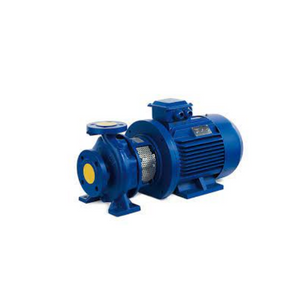
Centrifugal pumps
Centrifugal pumps are the most common type of industrial pump used in the oil and gas industry. Centrifugal pumps contain one or more rotating impellers that suck fluid into the suction end of the pump before forcing it out the discharge end using centrifugal force. Pumps with this design may be utilized in a wide range of pumping applications and are particularly well suited to handle filthy or low-viscosity liquids or large amounts of particles.
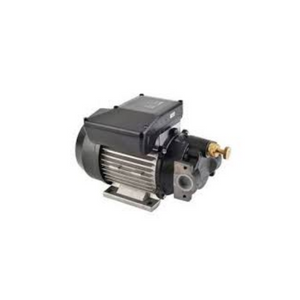
Oil transfer pumps
Oil transfer pumps are powered by a motor that generates vertical motion to drive the pump shaft, referred to as a ‘walking beam.’ Oil transfer pumps are generally utilized in onshore regions where there is a lot of oil, but the ground can’t get it out, and, depending on the depth and weight of the oil, these pumps may deliver one to ten gallons of petroleum with each stroke. The oil to the surface, an oil pump manually pumps liquid out of an oil well
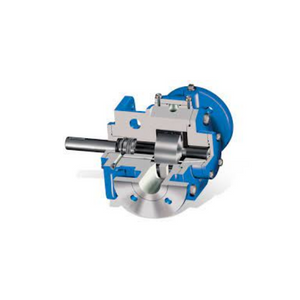
Positive displacement pump
Positive displacement pumps are designed to transport very viscous liquids at a lower flow rate but with a much higher pressure. This design provides pressure, which causes the liquid to flow to its intended location. Positive displacement pumps, unlike centrifugal pumps, do not require impellers to move the fluid. Instead, they use spinning or reciprocating elements to drive the liquid into a contained space.
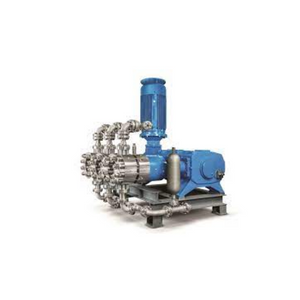
Diaphragm pump
During the upstream and midstream phases of crude oil refinement, a diaphragm pump is used to pull oil into the refinery chamber. It employs both a valve and a diaphragm. When the volume of a chamber grows, the pressure inside the chamber decreases, and the fluid pours in. The liquid is then forced out when the diaphragm goes down.
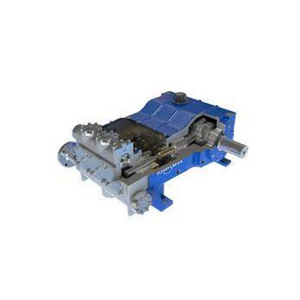
Reciprocating plunger pumps
Reciprocating plunger pumps are among the most common types of pumps used in the oil and gas industry. Plunger pumps pressurize fluid in an enclosed cylinder to a pipe system using the reciprocating action of plungers and pistons. Plunger pumps are known as constant flow pumps because the flow rate remains consistent regardless of the system pressure at any given speed.
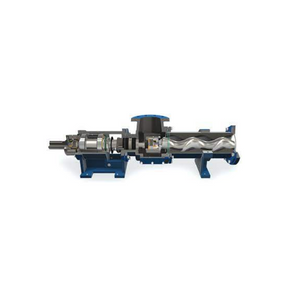
Progressive cavity pumps
A progressive cavity pump is a type of pump that moves fluid by turning its rotor, which causes a series of tiny, fixed-shape, discrete chambers to move through the pump. The flow rate remains practically constant at a given speed. Progressive cavity pumps are utilized in high viscosity applications or where it is not necessary to mix the pushed fluid.
Selection guide
What to specify for an accurate quotation
These parameters decide which variant suits your duty. Send what you know — unknown values can be marked for engineering assistance.
Typical applications
- Fuel and oil transfer
- Crude and product transfer
- Tank-farm and terminal service
- Chemical injection and dosing
- Drain and sump duty
FAQ
Frequently asked questions
Answers to the questions buyers most often ask before requesting a quotation.
Which pump types are used in oil & gas applications?
The page covers Centrifugal pumps, Oil transfer pumps, Positive displacement pump, Diaphragm pump, Reciprocating plunger pumps. The right choice depends on the fluid, solids content, viscosity, flow and head. Send us your process details and we will shortlist suitable options and confirm the selection with the source before quoting.
What should I specify when choosing a pump for oil & gas service?
Give the fluid and its properties, flow rate, total head, operating temperature and materials needed. For this industry, also confirm hazardous-area requirements and viscosity. With these details we can compare pump types, check suitability with the source and prepare an accurate quotation for your plant.
What is pumps in oil and gas?
Industrial pumps are essential devices required in every phase of oil and gas operations. Basically, they help transfer process fluids from one point to another. … Depending on the nature of the substance you want to transfer and your required flow rate, you’ll need a suitable pump for your needs.
Where are oil pumps used?
The oil pump in an internal combustion engine part that circulates engine oil under pressure to the rotating bearings, the sliding pistons and the camshaft of the engine. This lubricates the bearings, allows the use of higher-capacity fluid bearings and also assists in cooling the engine.
What is pumping in oil and gas?
Pumps are necessary components inside an oil drilling rig. They’re designed to accelerate the transference of fluid from one location to another. Without pumps, refineries cannot operate, as oil displacement is essential to an oil rig’s entire operation.
What kind of pumps are used in oil and gas industry?
A centrifugal pump is the most common type of pump used in the oil & gas industry. It comprises one or more impellers, which move fluids by rotation and draw them into the suction end of the pump and then, through centrifugal force, push the fluid out from the discharge end.
Related
Related products & guides
Need a pump for oil & gas service?
Send the fluid, flow rate, head, temperature and site conditions, and we will help shortlist suitable pumps and prepare a quotation.