- Home
- Products
- Industrial Pumps
- Centrifugal Pumps
Centrifugal Pumps
Centrifugal Pumps: Types, Selection & Supply
Centrifugal pumps move liquid by converting impeller rotation into flow and pressure. They are widely used in water supply, industrial process, HVAC, agriculture and municipal duties. This page explains horizontal, vertical, axial flow, mixed flow, single-stage and multi-stage types and their working principles.
- Horizontal and vertical centrifugal pumps
- Axial flow and mixed flow pumps
- Single-stage and multi-stage designs
- Working principle explained for each type
- Includes FAQs on cavitation and maintenance
Application-first selection
Tell us the medium, range and conditions — we match the product type to the duty.
Multi-category sourcing
Instruments, valves, filters, pneumatics and pumps on one enquiry.
Quotation against your specs
Every quote references the parameters you sent, so comparisons are like-for-like.
Engineer-to-engineer support
Ask a technical question before you commit to a model.
Centrifugal Pumps
Range, specifications & options
Flotronics helps buyers with pump selection and sourcing. Tell us the liquid, flow, head, temperature and power supply and our engineers will suggest suitable pump types and prepare a quotation. A short list of your operating conditions is usually enough for us to shortlist suitable options. Confirm specifications against the datasheet for your exact model before ordering.
Need a quote for Centrifugal Pumps?
Send the model or your operating parameters — unsure of a value? Mark it unknown and we will help. Monday to Saturday, 10:00 AM – 5:30 PM.
Centrifugal Pumps Supplier in India
Looking for centrifugal pumps for industrial or commercial duty? As a pump supplier, we provide a wide range of innovative pumping solutions to enhance your operations.
Centrifugal pumps are the workhorses of various industries, facilitating fluid transfer with efficiency and precision. Whether you're in manufacturing, agriculture, or any sector that relies on fluid handling, finding reputable centrifugal pumps suppliers and distributors is crucial. In this guide, we will navigate the world of centrifugal pumps, exploring the top suppliers and distributors, their offerings, and key considerations for making the right choice.
Horizontal Centrifugal Pump
Vertical Centrifugal Pump
Axial Flow Centrifugal Pump
Mixed Flow Centrifugal Pump
Single-Stage Centrifugal Pump
Multi-Stage Centrifugal Pump
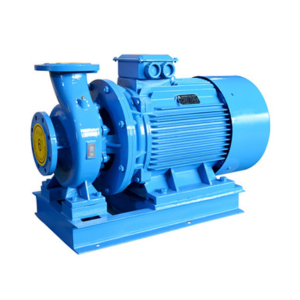
Horizontal Centrifugal Pump
Horizontal Centrifugal Pump
Horizontal centrifugal pumps are the most common type of centrifugal pump and are characterized by their horizontal orientation, with the pump shaft typically parallel to the ground. They are widely used for various industrial, commercial, and municipal applications.
Working Principle:
1. The impeller of a horizontal centrifugal pump is mounted on a shaft that is horizontally oriented.
2. When the impeller rotates, it generates centrifugal force, which propels the fluid outward from the center of the impeller.
3. The fluid is then directed to exit the pump casing horizontally through an outlet.
Specifications:
| Flow Rate: | Varied flow rates depending on the design and size, typically ranging from a few gallons per minute (LPM) to thousands of LPM. |
| Head (Pressure): | Suitable for a wide range of pressure requirements, from low to high head applications. |
| Common Applications: | Water supply, heating and cooling systems, chemical processing, and various industrial processes. |
Vertical Centrifugal Pump
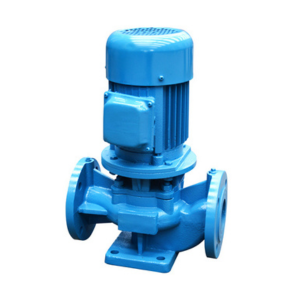
Vertical Centrifugal Pump
Vertical centrifugal pumps are designed with a vertical orientation, where the pump shaft extends vertically from the base to the motor above or below the liquid level. These pumps are often used in applications where space constraints or specific installation requirements necessitate a vertical configuration.
Working Principle:
1. In a vertical centrifugal pump, the impeller is mounted on a vertical shaft.
2. As the impeller rotates, it generates centrifugal force, which pushes the fluid outward from the impeller.
3. The fluid then travels vertically either upward or downward through the pump and is discharged at the appropriate level.
Specifications:
| Flow Rate: . | Variable flow rates, similar to horizontal pumps, ranging from a few LPM to thousands of LPM |
| Head (Pressure): | Suitable for a wide range of head requirements, from low to high-pressure applications. |
| Common Applications: | Sump and sewage pumping, deep-well pumping, industrial wastewater treatment, and other applications where a vertical configuration is advantageous. |
Single-Stage Centrifugal Pump
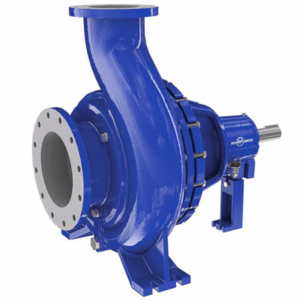
Single-Stage Centrifugal Pump
A single-stage centrifugal pump is the simplest form of centrifugal pump, featuring a single impeller and one casing. It is primarily used for low-pressure applications and is suitable for transferring clean fluids without high head requirements.
Working Principle:
When in operation, the impeller rotates, creating a centrifugal force that propels the fluid outward. This results in a low-pressure region at the center, causing fluid to be drawn into the pump through the inlet. The accelerated fluid is then discharged through the outlet.
Specifications:
| Flow Rate: | Typically up to 2,000 gallons per minute (LPM). |
| Head (Pressure): | Generally low head applications, typically up to 200 feet. |
| Common Applications: | Water supply, irrigation, drainage, and low-pressure fluid transfer. |
Multi-Stage Centrifugal Pump:
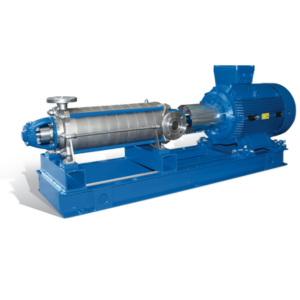
Multi-Stage Centrifugal Pump:
Multi-stage centrifugal pumps have multiple impellers stacked in series within a single casing. This design allows for higher pressure generation, making them suitable for applications requiring substantial heads.
Working Principle:
Similar to single-stage pumps, each impeller generates centrifugal force. However, in a multi-stage pump, the fluid passes through multiple impellers in sequence, with each stage increasing the pressure.
Specifications:
| Flow Rate: | Up to 2,000 LPM. |
| Head (Pressure): | High-pressure applications, commonly exceeding 1,000 feet. |
| Common Applications: | Boiler feedwater, high-pressure water supply, and process industries requiring elevated pressure. |
Axial Flow Centrifugal Pump:
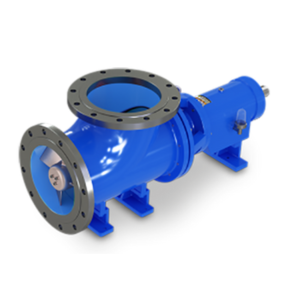
Axial Flow Centrifugal Pump:
Axial flow centrifugal pumps are designed to move large volumes of fluid with relatively low head or pressure requirements. They are characterized by a straight-through flow path, where the fluid flows parallel to the pump shaft. These pumps are ideal for applications that demand high flow rates and minimal pressure increase.
Working Principle:
1. The impeller of an axial flow pump consists of curved blades that resemble an aircraft propeller.
2. When the impeller rotates, it draws fluid in through the inlet and accelerates it in the same axial direction as the pump shaft.
3. The kinetic energy imparted to the fluid by the impeller's rotation results in the fluid being expelled at high velocity through the outlet.
Specifications:
| Flow Rate: | Very high flow rates, typically in the range of thousands to hundreds of thousands of gallons per minute (LPM). |
| Head (Pressure): | Low to moderate head applications, usually less than 50 feet. |
| Common Applications: | Flood control, irrigation, drainage, cooling water circulation, and wastewater treatment in large-scale industrial and agricultural settings. |
Mixed Flow Centrifugal Pump
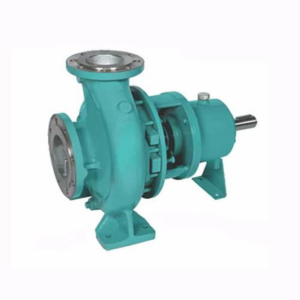
Mixed Flow Centrifugal Pump:
Mixed-flow centrifugal pumps combine features of both axial flow and radial flow (traditional centrifugal) pumps. They are designed to handle moderate to high flow rates with moderate to high head requirements. The flow path in a mixed flow pump includes both axial and radial components.
Working Principle:
1. The mixed flow pump features an impeller with blades that are curved in a manner between those of axial and radial flow impellers.
2. As the impeller rotates, it draws fluid in through the inlet.
3. The combination of axial and radial flow within the impeller imparts kinetic energy to the fluid, allowing it to exit the pump at an angle between axial and radial directions.
Specifications:
| Flow Rate: | Moderate to high flow rates, typically ranging from hundreds to thousands of LPM. |
| Head (Pressure): | Moderate to high head applications, often between 50 to 1,000 feet. |
| Common Applications: | Agricultural irrigation, stormwater management, wastewater treatment, and industrial processes where a balance of flow and pressure is required. |
Specialities of Centrifugal Pumps:
Certainly, here are the special features of centrifugal pumps in bullet points:
- Modular construction for easy customization
- High interchangeability for versatile applications
- Fast delivery to meet urgent needs
- Versatile shaft sealing options, including gland packing and mechanical seal
- Process type design minimizes downtime
- Back pull-out design for easy inspection and maintenance
- Closed impeller ensures long-term high efficiency
- 3-bearing design for continuous, productive operation
- Larger shaft and bearing size for a sturdy design.
Benefits and Features of Centrifugal Pumps:
Centrifugal pumps offer several benefits and features that make them indispensable in various industries:
Benefits:
1. Efficiency: Centrifugal pumps are known for their high efficiency in fluid transport, reducing energy consumption and operational costs.
2. Versatility: They can handle a wide range of fluids, from water to corrosive chemicals, making them suitable for diverse applications.
3. Low Maintenance: These pumps have fewer moving parts, resulting in easier maintenance and reduced downtime.
4. Consistent Flow: Centrifugal pumps provide a steady flow rate, making them ideal for processes that require uniform fluid delivery.
5. Self-Priming: Some centrifugal pumps are self-priming, meaning they can start pumping without needing to be manually filled with liquid.
Features:
1. Impeller: The rotating impeller is the core component that imparts kinetic energy to the fluid.
2. Casing: The casing encloses the impeller and guides the fluid's flow path.
3. Suction and Discharge Ports: These ports facilitate the entry and exit of the liquid.
4. Shaft and Bearings: The shaft connects the impeller to the motor, while bearings provide support and reduce friction.
5. Types: Centrifugal pumps come in various types, including single-stage, multi-stage, end-suction, and submersible, each designed for specific applications.
Products
Selection guide
What to specify for an accurate quotation
These parameters decide which variant suits your duty. Send what you know — unknown values can be marked for engineering assistance.
Typical applications
- Water supply and booster systems
- HVAC and cooling water
- Industrial process transfer
- Agriculture irrigation
- Municipal pumping
FAQ
Frequently asked questions
Answers to the questions buyers most often ask before requesting a quotation.
What is cavitation and how can it be avoided?
Cavitation is vapour bubble formation when suction pressure is too low, which damages the impeller. Avoid it by ensuring adequate NPSH, short suction piping and correct pump sizing.
When should I choose a multi-stage pump?
Multi-stage pumps are used where higher head is needed from a compact footprint, as the liquid passes through several impellers in series.
Can centrifugal pumps handle abrasive or corrosive liquids?
Yes with suitable materials and seals, but standard pumps wear quickly with solids. Tell us the liquid and we will advise on materials or alternative pump types.
What do you need to quote a pump?
Send liquid, flow, head, temperature, suction conditions, power supply and quantity.
What is a centrifugal pump, and how does it work?
A centrifugal pump is a mechanical device designed to transfer fluids by utilizing centrifugal force. It operates by rotating an impeller, which creates a low-pressure area at the center and propels fluid outward through the pump casing, ultimately transferring it from the inlet to the outlet.
What are the key components of a centrifugal pump?
Centrifugal pumps consist of essential components, including an impeller, casing, inlet, outlet, and a motor or drive mechanism. The impeller is the rotating element responsible for fluid movement, while the casing contains and guides the flow.
Related
Related products & guides
Need a centrifugal pump for your duty?
Send the liquid, flow, total head, temperature and power supply for a quotation, or ask our engineers to help define the duty.